David McCullough - 1776
Though I cannot claim to have not experienced such suspense in reading of historical events, this thrilling account of our nation's founding year banished all such previous memories. ... Me
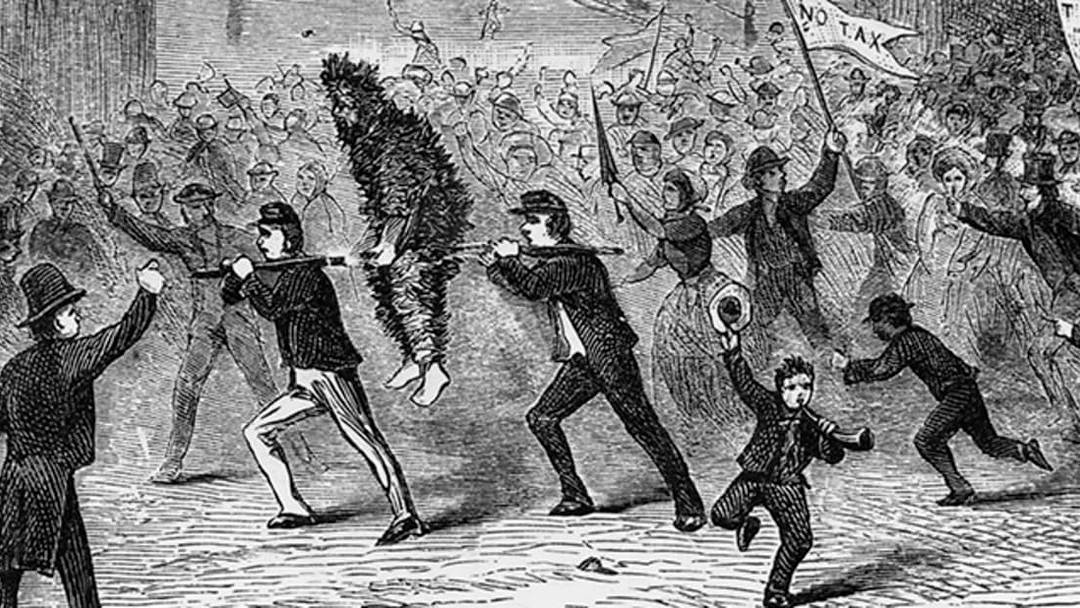

Patriot mobs took to the streets to hunt down Loyalists. Those they seized were beaten, tarred and feathered, burned with candles, or made “to ride the rail,” the cruel punishment whereby a man was forced to straddle a sharp fence rail held on the shoulders of two men, with other men on either side taking a grip on his legs to keep him straight, and thus the victim was paraded through the streets. (after news of plot to assassinate General G. Washington)
The next day came another surprise move when Lord Howe sent a selected officer from the Eagle, Lieutenant Philip Brown, across the bay to New York under a flag of truce carrying a letter addressed to "George Washington, Esq." Brown was met by Joseph Reed, who on Washington's orders had hurried to the waterfront, accompanied by Henry Knox and Samuel Webb.
"I have a letter, sir, from Lord Howe to Mr. Washington," Lieutenant Brown began.
"Sir," replied Reed, "we have no person in our army with that address."
When Brown asked by what title Mr. Washington chose to be addressed, Reed replied, "You are sensible, sir, of the rank of General Washington in our army."
"Yes, sir, we are," answered Brown. "I am sure Lord Howe will regret exceedingly this affair, as the letter is quite of a civil nature and not a military one."
Lord Howe also regretted "exceedingly that he was not here sooner," Brown added, implying that the admiral regretted not arriving in New York before the Declaration of Independence.
Brown returned to the Eagle to report the response of the Americans. ("So high is the vanity and the insolence of these men!" huffed Ambrose Serle in his journal.) But the admiral persisted. Three days later, Brown departed again under a white flag, the letter now addressed to "George Washington, Esq, etc., etc." But again it was declined.
The day after the admiral made a third try, this time sending a different messenger, a captain named Nisbet Balfour, to inquire whether General Washington would receive the adjutant general to General Howe, Colonel James Paterson. This time the answer was yes.
Thus exactly at noon, Saturday, July 20, Colonel Paterson arrived at New York and was escorted directly to No. 1 Broadway, where he met Washington with all due formality, with Reed, Knox, and others in attendance.
Washington's guard stood at attention at the entrance. Washington, as Knox wrote, was "very handsomely dressed and made a most elegant appearance," while Paterson conducted himself with what Reed considered "the greatest politeness and attention."
Seated across a table from Washington, Paterson assured him that Lord Howe did not mean to "derogate from the respect or rank of General Washington." Both Lord and General Howe held the "person and character" of General Washington "in the highest esteem," Paterson said. But when he took from his pocket the same letter—addressed still to "George Washington, Esq., etc., etc."—and placed it on the table between them, Washington let it lie, pointedly refusing to touch it.
One Virginia company, led by Captain Daniel Morgan, had marched on a "bee-line" for Boston, covering six hundred miles in three weeks, or an average of thirty miles a day in the heat of summer.
Mostly backwoodsmen of Scotch-Irish descent, they wore long, fringed hunting shirts, "rifle shirts" of homespun linen, in colors ranging from undyed tan and gray to shades of brown and even black, these tied at the waist with belts carrying tomahawks. At a review they demonstrated how, with their long-barreled rifles, a frontier weapon made in Pennsylvania and largely unknown in New England, they could hit a mark seven inches in diameter at a distance of 250 yards, while the ordinary musket was accurate at only 100 yards or so. It was "rifling" — spiraled grooves inside the long barrel — that increased the accuracy, and the new men began firing at British sentries with deadly effect, until the British caught on and kept their heads down or stayed out of range.
We are fighting for our country, for posterity perhaps. On the success of this campaign, the happiness or misery of millions may depend. (Henry Knox, writing to his wife Lucy)
"Parade with us, my brave fellows. There is but a handful of the enemy, and we will have them directly!" (General G. Washington during the battle of Trenton - the taking of the Hessians)
Draw off the garrison, or they will be lost. (last words of General Charles Lee to General G. Washington before the loss of Fort Lee)
These are the times that try men's souls: (Thomas Paine)
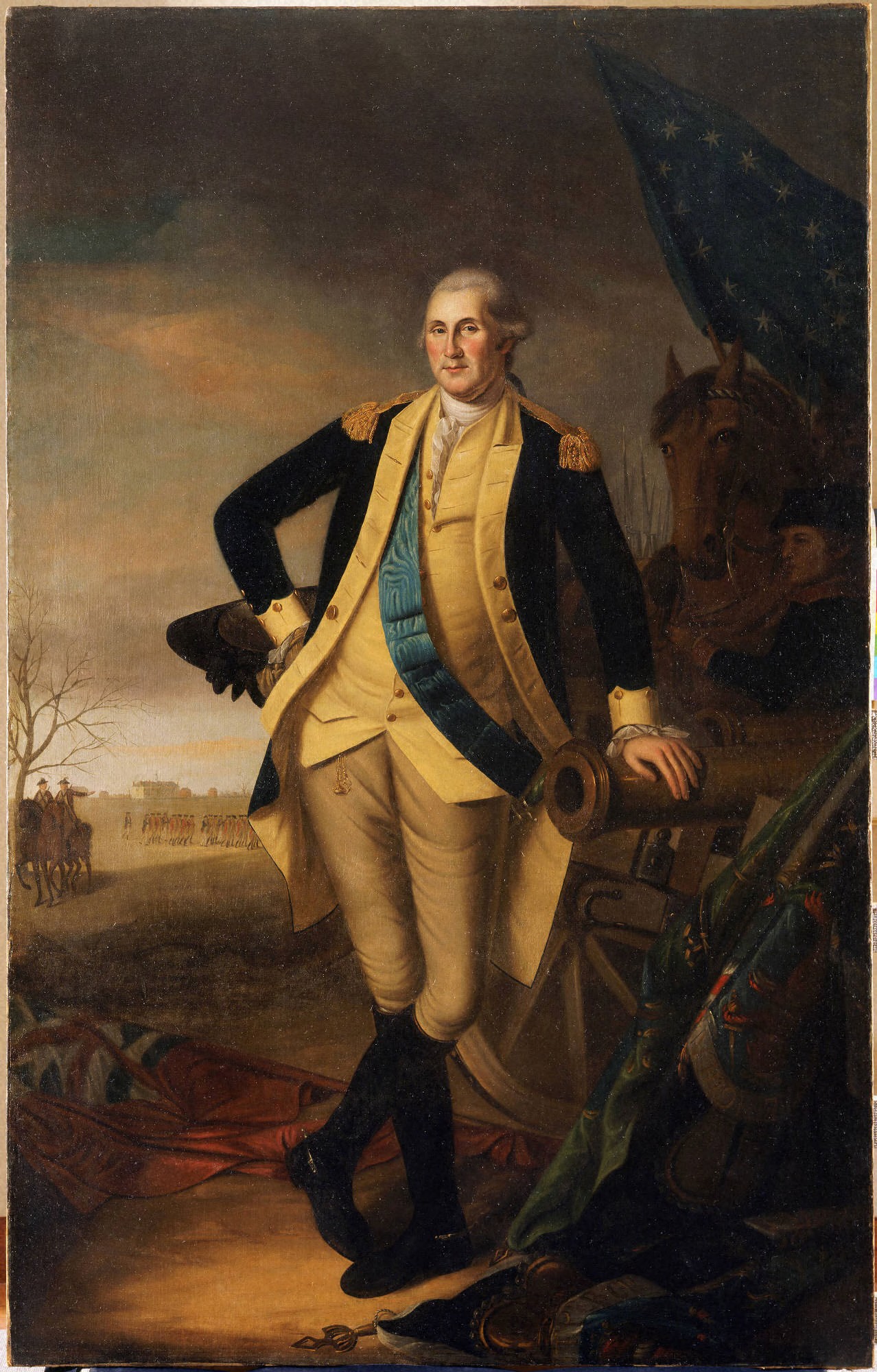
Washington at the Battle of Princeton
Heavy rains had left the narrow road sloppy with mud, and the men were in tatters, many without shoes, their feet wrapped in rags. Washington rode at the rear of the column, a point long remembered by a newly arrived eighteen-year-old Virginia lieutenant named James Monroe. "I saw him... at the head of a small band, or rather in its rear, for he was always near the enemy, and his countenance and manner made an impression on me which I can never efface."
By young Monroe's estimate, Washington had at most 3,000 men, yet his expression gave no sign of worry. "A deportment so firm, so dignified, but yet so modest and composed, I have never seen in any other person."
Comments
Post a Comment