How Innovation Works - Matt Ridley
Apologies again - random notes is all I have for you..
1712 - Dudley Castle in Warwickshire - the first working Newcomen Engine.
Engraving of it by Thomas Barney, 1719 (Getty Images) :

"Seldom in the history of a technology has so momentous an invention been developed by one man so rapidly to so developed a form" - Lionel Rolt (writer and biographer, 1910-1974)
Yet at first, it was a horribly inefficient device. By today's standards, a monster, wasting about 99% of the energy in its coal fire.
There was luck involved - steam melted some solder that was used to seal the chamber allowing water to rush in and condense the steam, dropping pressure and now allowing the atmosphere to push the piston and thereby do work lifting a load - how early engines worked. It was the immortal James Watt who realized you could boost efficiency by using a different chamber to do the condensation and thereby keep the primary chamber hot.
Locomotives
Stationary steam engines that pulled wagons through cables were already in vogue. Who go things moving? Richard Trevithick
 |
| Richard Trevithick (1771-1833), an early pioneer of steam-powered road and rail transport, and his most significant contributions were the development of the first high-pressure steam engine and the first working railway steam locomotive. |
T realized that high-pressure steam could now be handled by modern metal-working, giving much more power, making an engine portable and doing away with the need for a condenser. Ah - the ".. could now be handled by.." rang a bell - Elon Musk convincing the government that "space-grade" electronics was a scam - modern consumer electronics fabrication is so reliable that there is no need for anything "space-grade" anymore.
Watercraft : The Screw Propeller
 |
| Sir Francis Pettit Smith (1808-1874), originator of the screw propeller and instrumental in the construction of the world's first screw-propelled steamship, SS Archimedes (237 tonnes, 80 HP steam engine). Responsible for converting the world to screw propellers virtually overnight - in 1845. |
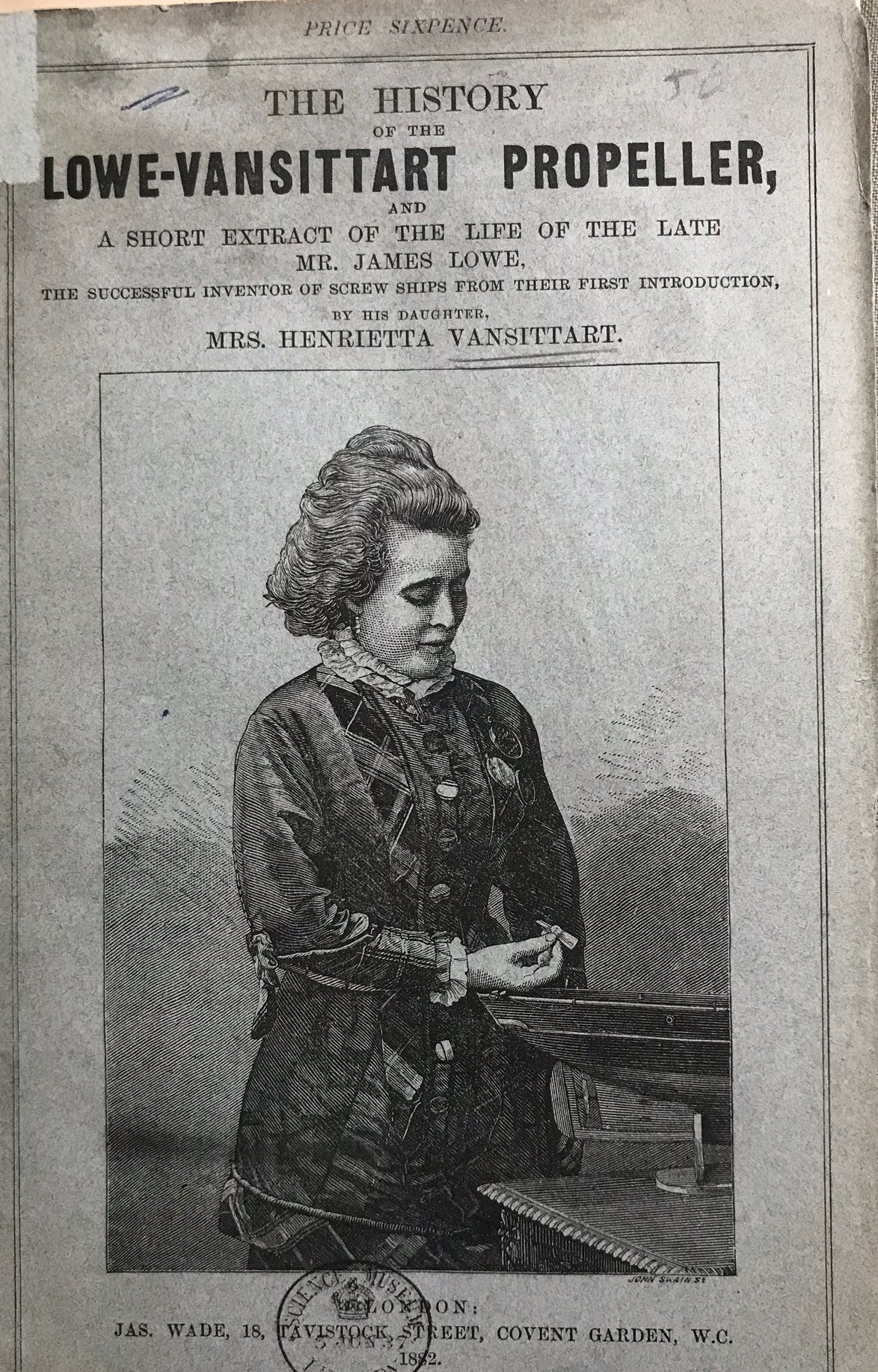 |
| Henrietta Vansittart (1833-1883), English engineer and inventor, awarded a patent for a screw propeller called the Lowe-Vansittart propeller |
Food Production
.jpg) |
| Dr. Borlaug (1914-2009) in 2004 aged 91. Double Nobel Peace Prize winner. Credited with saving a billion lives. |
 |
| Informative signage in India at the site where Dr. Norman Barlaug did his research to introduce genes from Norin 10 into his high-yielding variety to solve the problem of lodging. Norin 10 was developed by crossing a dwarf-variety called Daruma with an 1892 American import named Fultz. Later, in the 1920's this was crossbred with another American variety called Turkey Red. Japan had a severe famine in the Tohoku area around the time of the Russo-Japanese war. |
Things I didn't know about wheat and Dr. Barlaug : It's self-pollinating - so, to cross-breed, you first have to prevent it from self-pollinating, and then introduce (only😊) the pollen you want. It required a tonne of manual labour considering the thousands of samples involved. The negative impact of the green revolution (at least according one Indian historian) : degradation of soil, in the reduction of water table and a broken agrarian community.
The Use of Zero
 |
| Indian astronomer and mathematician, whose 628 AD book Brahmasputasiddhanta gave formal rules for computing with zero. It was a work primarily devoted to astronomy. |
Indoor Toilets
 |
| Alexander Cumming, Scottish watchmaker and instrument inventor, the first to patent a design of the flush toilet in 1775. Credited with the invention of the indispensable S-trap that prevents entry of sewer gases. |
Food
 |
| René Redzepi, Danish chef and co-owner of the three-Michelin star restaurant Noma, won San Pellegrino award for most innovative restaurant in the world three years in a restaurant pioneered concept of serving meat with flora from the animals natural habitat. |
In people descended from non-dairy cultures, (BTW, in general, adult mammals cannot digest lactose - says Ridley. Really? Who hasn't seen grown dogs drink milk?) the lactase gene is programmed to switch off at weaning, when no longer needed.
Computers
 |
| Howard Aiken (physicist and computing pioneer, instrumental in the development of the Harvard Mark 1), Herman Goldstine and John von Neumann. A chance meeting between Goldstine and von Neumann informed the latter of the ENIAC and later (after a personal visit by von Neumann to UPenn) led to the ENIAC being designed to run programs stored in memory. |
Innovation in General
David Rowan, in Non-Bullshit Innovation, details the story of Naspers, a South-African conglomerate that eventually made a killing with TenCent - converting $32m into about $150 billion!


Comments
Post a Comment